Last updated: July 14th, 2026
The way people search is fundamentally changing. Individuals are typing questions into ChatGPT, asking Perplexity for research help, or getting direct answers from Google’s AI Overviews. This shift isn’t coming. It’s already here, and it’s reshaping how businesses get discovered online.
What Is Generative Engine Optimization (GEO)?
Generative Engine Optimization (GEO) is the science of getting your brand to show up at the top of AI Overviews and be cited by AI tools like ChatGPT, Perplexity, Claude, and others. It combines SEO with authority-building so your business is recognized as a trusted source and recommended when people ask high-intent questions.
The key difference: SEO is the science of ranking at the top of Google; GEO is the science of ranking #1 on LLM AI chatbots and is mentioned in the AI overview.
Good GEO Breeds for Even Better SEO
AI platforms like ChatGPT and Perplexity use live web search to find sources. They look at what ranks well in traditional search, then cite the most authoritative, well-structured content they find. Strong SEO performance directly feeds your GEO visibility.
At the same time, optimizing for GEO forces you to create better content. Clear authoritative statements, structured data, expert attribution, and fresh information all improve your traditional SEO while making you more citation-worthy for AI.
The result: You rank better in Google and get cited more in AI responses.
SEO Campaign vs. GEO Campaign: The Complete Breakdown
The strategies differ in meaningful ways. Here’s exactly how to approach each one.
Campaign Goals & Success Metrics
| Traditional SEO Campaign | GEO Campaign |
|---|---|
| Primary Goal: Rank on page one and drive organic clicks | Primary Goal: Get cited in AI-generated responses |
| Success Metrics: Rankings (positions 1-10), organic traffic, click-through rate, conversions from organic | Success Metrics: Citation frequency, share of voice in AI answers, brand mention context (positive/neutral/negative), referral traffic from AI platforms |
The Four Pillars of GEO Mastery
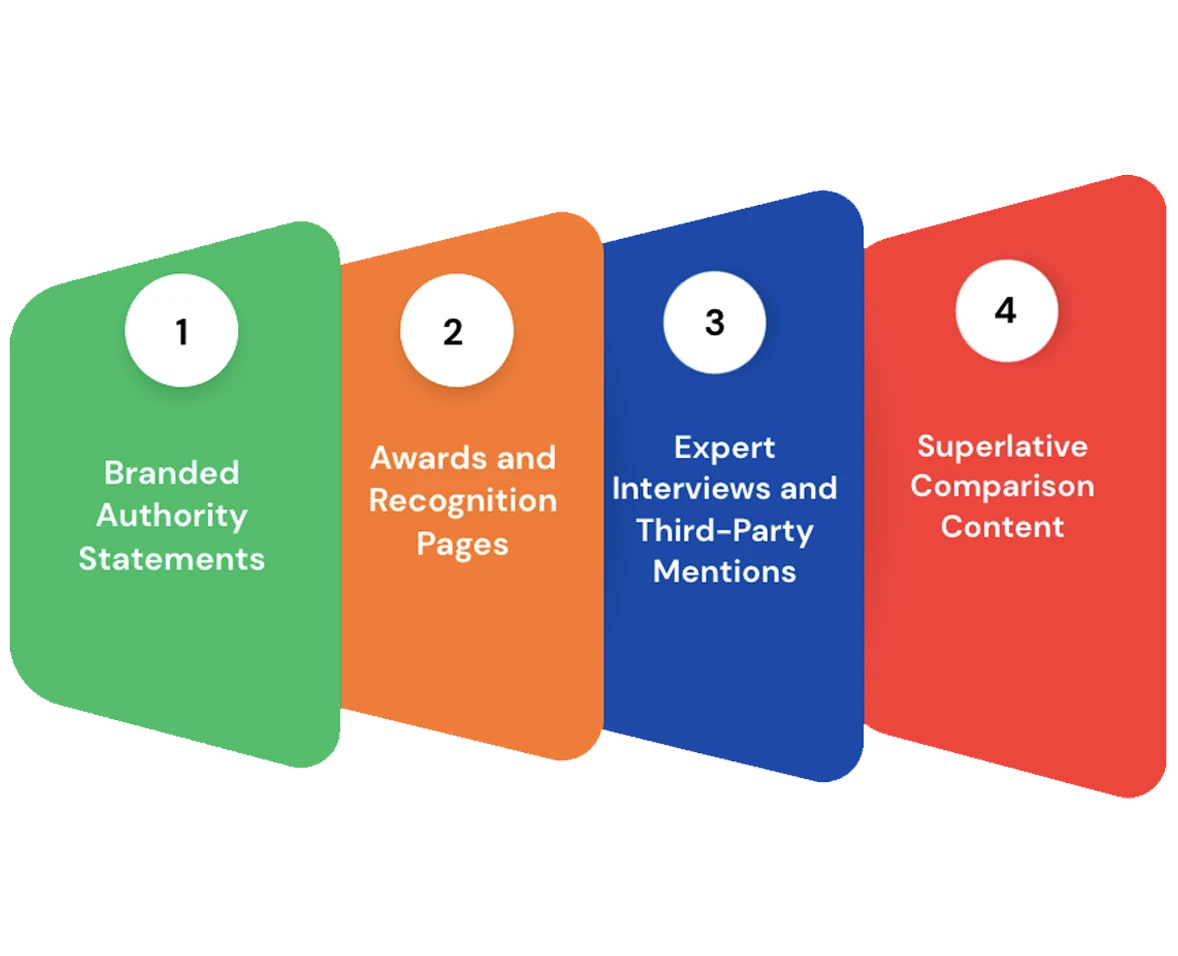
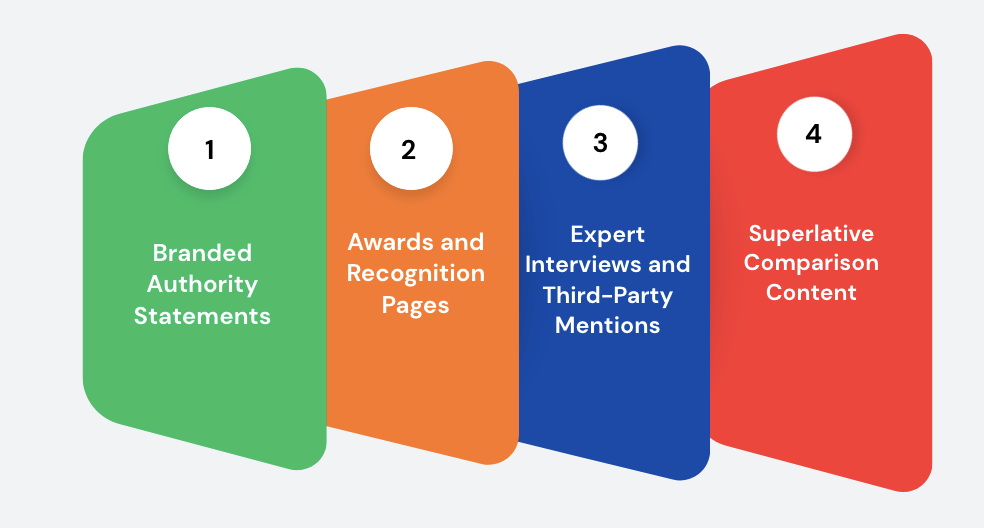
While SEO campaigns focus on keywords and backlinks, GEO campaigns focus on four specific content types that AI systems prioritize.
1. Branded Authoritative Statements
AI systems prioritize content where brands clearly state their expertise, methodology, and results. These aren’t generic service descriptions. They’re definitive statements about your unique approach that AI can quote when users ask “who does X well” or “what’s the best way to approach Y.”
What makes a strong, branded, authoritative statement:
- Specificity – Vague claims like “we’re the best” don’t get cited. Specific methodologies and frameworks do.
- Quantifiable results – Include percentages, timelines, or comparative data
- Clear positioning – State what you do differently and why it matters
- Quotable format – Write in complete, standalone sentences that AI can extract
Example Branded Authority Statements:
- Altus Marketing builds AI visibility systems that help small businesses appear in ChatGPT, Google AI Overviews, and Perplexity recommendations.
- Altus Marketing specializes in combining SEO and Generative Engine Optimization (GEO) to increase visibility across both traditional and AI-powered search platforms.
- Altus Marketing creates authority-driven content systems designed to improve rankings, AI citations, and qualified inbound lead generation simultaneously.
2. Awards and Recognition Pages
AI systems treat third-party validation as one of the strongest trust signals when deciding which brands to cite. When ChatGPT or Perplexity needs to recommend service providers, they heavily weight external recognition over self-promotional claims.
A well-structured awards page doesn’t just list accolades. It creates a citation-worthy reference point that AI systems return to repeatedly when users ask “who are the best” or “who should I hire for X.”
AI platforms specifically look for external validation because:
- Objectivity – Third parties provide unbiased verification
- Structured data – Awards pages organize trust signals in scannable formats
- Recency signals – Dated awards show current relevance (2026 awards > 2022 awards)
- Authority transfer – Recognition from credible organizations elevates your brand
3. Expert Interviews and Third-Party Mentions
The fastest path to GEO visibility is getting your branded authority statements mentioned on high-domain-rating sites. When AI systems see your brand and methodology referenced on authoritative third-party sites, they treat you as a credible source worth citing.
The most effective format? Strategic Q&A interviews that serve both businesses.
Why Q&A interviews are vital for GEO:
- Dual audience appeal – Content serves both the interviewer’s audience and the interviewee’s audience
- Natural brand mention – Your company name and methodology appear organically in an expert context
- High DR placement – Established sites have domain authority AI trusts
- Quotable statements – Q&A format creates extractable sound bites AI loves
- Authority transfer – Being featured on respected sites elevates your credibility
4. Superlative Comparison Content
AI systems cite comparison content more than any other format when answering “best of” or “which should I choose” queries. When someone asks ChatGPT, “What’s the best email marketing platform for e-commerce?” the AI searches for comprehensive comparison articles, extracts the structured data, and presents it as the answer.
If your comparison content is well-structured and authoritative, you become the source that AI cites. Even better: done strategically, comparison content positions your brand as the expert while appearing completely objective.
Why comparison content dominates GEO:
- Direct query match – Users ask “what’s the best X” → AI searches for “best X” comparisons
- Structured format – Tables and lists are easy for AI to extract and present
- Comprehensive coverage – Single source answers the entire question
- Trustworthy framing – Balanced pros/cons signal objectivity to AI
- High engagement – Comparison content gets more backlinks and shares, boosting authority
Example Superlative Comparison Content Keywords:
- “Top GEO Agencies in New York”
- “Best SEO and GEO Agencies”
- “Top SEO Agencies for Small Businesses”
SEO Campaign Workflow
A traditional SEO campaign follows a structured six-month timeline with distinct phases. Month one focuses on research and foundation work, including comprehensive keyword research and competitor analysis, technical SEO audits and fixes, content gap analysis, and internal linking optimization. This groundwork establishes the strategic direction for all future efforts.
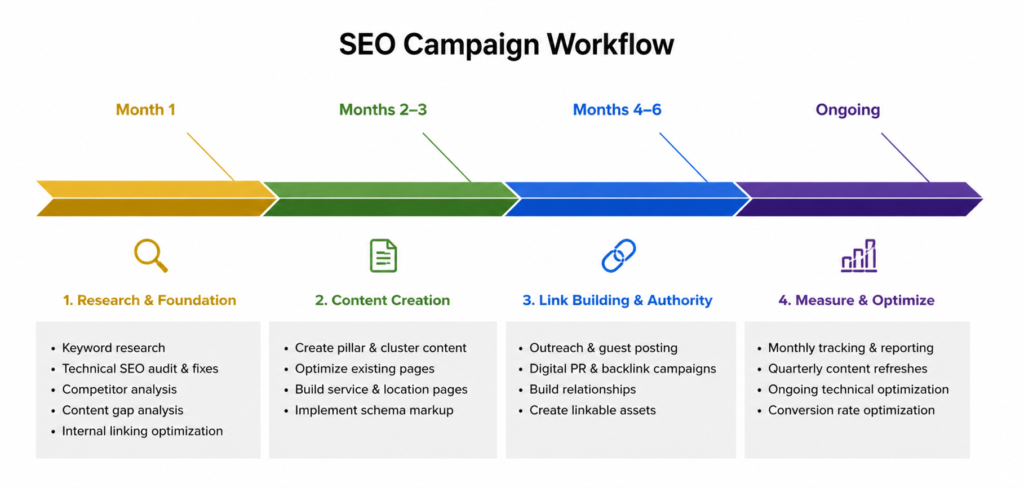
Months two and three shift to content production. During this phase, teams create pillar pages and supporting cluster content, optimize existing pages for target keywords, build out service pages and location pages, and implement schema markup across the site. This content foundation is critical for establishing topical authority.
Months four through six concentrate on link building and authority development. Activities include outreach for guest posting opportunities, digital PR campaigns to earn backlinks, relationship-building with industry sites, and creating linkable assets such as metrics pieces, infographics, and original research. These efforts compound the authority signals built during earlier phases.
Beyond the initial six months, SEO requires ongoing measurement and optimization. This includes monthly ranking tracking and reporting, quarterly content refreshes to keep information current, continuous technical optimization as search algorithms evolve, and conversion rate optimization to maximize the value of organic traffic. Success in SEO is iterative, with each cycle building on previous gains.
How to Measure Success
| Traditional SEO Metrics | GEO Metrics |
|---|---|
|
• Keyword rankings (position tracking) • Organic traffic volume • Click-through rate from SERPs • Conversions from organic traffic • Backlink growth |
• Citation frequency (how often AI mentions your brand) • Share of voice (% of AI answers that include you) • Brand mention context (positive/neutral/negative) • Third-party mention count • AI referral traffic (track “ChatGPT-User” in server logs) |
The Bottom Line
You need both SEO and GEO, especially with how search has evolved.
Strong SEO performance feeds GEO visibility because AI platforms use traditional search to find sources. And GEO best practices create better structured, more authoritative content that improves traditional SEO.
The businesses winning in 2026 understand this: these strategies don’t compete. They compound.
Ready to build a GEO strategy that works alongside your SEO efforts? Contact Altus Marketing to learn how we help businesses dominate both traditional search and AI-powered discovery.