We reviewed Google Maps ranking timelines from published agency benchmark reports, local SEO case studies, and the 2026 Local Search Ranking Factors survey. Most businesses reach the Map Pack in 3 to 6 months of consistent optimization. Businesses in low-competition categories can rank in as little as 30 to 90 days. Businesses in saturated categories, like personal injury law or HVAC in a major metro, often need 9 to 14 months to break into the top three.
Below, you’ll find that data broken out across 34 different industries, their respective competition level, and estimated timeline; followed by the exact 10-step process to rank faster in yours, alongside some common practical mistakes.
Average Time to Rank on Google Maps, Industry & Competitiveness
Competitiveness varies enormously by category and metro size, and it’s the single biggest driver of how fast you’ll see movement. The table below breaks out common categories by competitiveness level, how quickly initial changes show up, and what actually controls the timeline.
| Industry | Competitiveness | Time to Initial Movement | Time to Top 3 (Map Pack) | What Drives the Timeline |
|---|---|---|---|---|
| Legal Services (General Practice & Personal Injury) | Very High | 4 to 8 weeks | 9 to 14+ months | Strong backlink profiles and trust signals are expected, and many firms compete for the same handful of keywords in every major metro. |
| Financial & Wealth Advisory | Very High | 6 to 10 weeks | 9 to 18 months | Top-ranked advisors tend to have established review profiles, trust expectations are high, and independents compete against national broker-dealers and robo-advisors. |
| Mortgage Brokers | Very High | 2 to 4 weeks for near-me terms | 6 to 9 months | Independent brokers compete against national lenders like Rocket Mortgage and loanDepot, which carry outsized domain authority. |
| Medical Spas & Aesthetics | High | 60 to 90 days | 6 to 12 months in major metros | “Botox near me” is a heavily contested local search, and competitive positioning usually requires a large review count with steady new reviews. |
| Independent Insurance Agencies | High | 60 to 90 days | 4 to 6 months (up to 9 in saturated metros) | Competes against national direct writers, lead-generation aggregators, and carrier locator pages, not just other local agencies. |
| HVAC Contractors | High | 4 to 8 weeks | 6 to 12 months | Top 3 competitors in dense metros often carry very large review counts, and emergency-intent searches concentrate demand into a handful of terms. |
| Plumbing Services | High | 4 to 8 weeks | 6 to 12 months | Emergency-intent searches concentrate demand into the same “near me” terms every local plumber targets simultaneously. |
| Electricians | High | 4 to 8 weeks | 6 to 10 months | Licensing and certification trust signals plus a review-volume race mirror the same competitive dynamics as plumbing and HVAC. |
| Roofing Contractors | High | 6 to 8 weeks | 6 to 9 months (12 to 18 for full maturity in saturated metros) | Storm-driven lead generation creates markets with thousands of licensed competitors chasing the same seasonal spikes. |
| General Contracting & Design-Build Firms | High | 6 to 10 weeks | 6 to 12 months | Large project values draw aggressive review and citation competition similar to roofing, plus expectations for detailed portfolio content. |
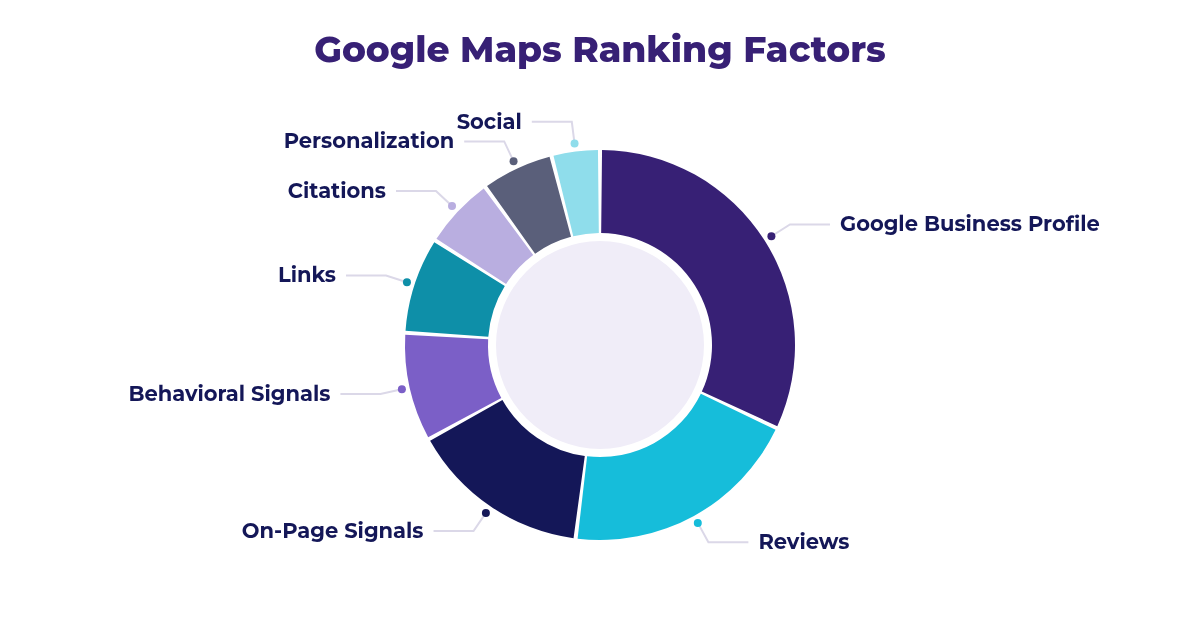
| Dental Practices | Moderate to High | 2 to 8 weeks | 3 to 6 months (9 to 12 in DSO-heavy metros) | Google Business Profile signals are estimated at about a third of local pack ranking weight in the 2026 Whitespark survey, and DSO consolidation adds multi-location competitors. |
| Accounting & Tax Preparation | Moderate to High | 30 to 90 days | 4 to 8 months (6 to 12 in saturated metros) | Seasonal search spikes around tax season and direct competition from national chains like H&R Block shape the timeline. |
| Pest Control Services | Moderate to High | 30 to 60 days | 4 to 6 months | Requires a competitive review count and dedicated pages for the main areas in a multi-city service area. |
| Veterinary Clinics | Moderate to High | 30 to 60 days | 3 to 6 months (6 to 12 in large metros) | Corporate consolidation from chains like VCA and Banfield raises the bar for independent clinics in bigger markets. |
| Property Management Companies | Moderate to High | 4 to 8 weeks | 3 to 6 months (6 to 12 for competitive organic terms) | Profiles serve owners and renters at once, so separate city and service pages are needed to capture both search intents. |
| Landscaping & Lawn Care | Moderate to High | 30 to 60 days | 4 to 7 months | Seasonal demand spikes concentrate competitor activity into a few months each year, compressing the usual ranking timeline. |
| Mental Health & Counseling (Private Practice) | Moderate | 1 to 2 weeks for GBP changes, 4 to 8 weeks overall | 3 to 6 months | Many solo practitioners rely on referral directories instead of SEO, so a fully completed profile often moves fast in most markets. |
| Residential & Commercial Cleaning Services | Moderate | 30 to 60 days | 3 to 5 months | Low barrier to entry means many competitors exist, but few maintain a complete, active profile, rewarding basic consistency. |
| Real Estate Brokerages (Residential) | Moderate | 30 to 60 days | 3 to 6 months | Brokerages compete city-wide rather than neighborhood by neighborhood, a broader and slower fight than individual agent profiles. |
| Physical Therapy Clinics | Moderate | 4 to 8 weeks | 3 to 6 months | Many patients arrive through physician referral rather than search, which softens direct local SEO competition compared to other healthcare categories. |
| Hair Salons & Barbershops | Moderate | 30 to 60 days | 3 to 6 months | Salons are everywhere, but relatively few invest heavily in SEO, so consistent basics are rewarded. |
| Auto Repair Shops | Moderate | 30 to 60 days | 3 to 6 months | High business density is offset by low SEO investment industry-wide, so a complete, review-rich profile stands out quickly. |
| Boutique Hotels & B&Bs | Moderate | 30 to 60 days | 3 to 6 months | OTA listings from Booking.com and Expedia frequently outrank a property’s own site and profile, adding a layer of competition beyond other hotels. |
| Event Venues & Catering | Moderate | 4 to 6 weeks | 3 to 5 months | Purchase decisions are infrequent and high-consideration, which keeps the number of serious local SEO competitors relatively small. |
| Restaurants (Full-Service) | Moderate | 4 to 6 weeks | 3 to 6 months | Menu accuracy, category selection, and review recency carry more ranking weight than backlinks, though reservation platforms add a citation layer to manage. |
| IT Services & Managed Support (MSPs) | Low to Moderate | 4 to 6 weeks | 3 to 6 months | B2B search volume is far lower than consumer categories, and buyers increasingly ask AI assistants directly, thinning traditional Map Pack competition. |
| Architecture & Design Firms | Low to Moderate | 4 to 8 weeks | 3 to 5 months | High-consideration, low-frequency purchases generate limited local search volume, so few firms compete seriously for Map Pack visibility. |
| Business & Management Consulting | Low to Moderate | 4 to 6 weeks | 2 to 4 months | Low local search volume for “consultant near me” style terms means the category is rarely contested hard at the Map Pack level. |
| Marketing & Advertising Agencies | Low to Moderate | 4 to 6 weeks | 2 to 4 months | Most local competitors set up a Google Business Profile once and abandon it, so ongoing basic maintenance often wins the category. |
| Fast Food & Quick-Service Restaurants | Moderate to Low | 3 to 4 weeks | 2 to 4 months | National chains win brand-name searches by default, but independent and regional concepts compete mainly on review recency and menu accuracy. |
| Coffee Shops & Cafes | Moderate to Low | 3 to 4 weeks | 2 to 4 months | Foot-traffic businesses rely on proximity and review recency more than backlinks, shortening the typical timeline. |
| Specialty Food & Grocery Retail | Moderate to Low | 3 to 4 weeks | 2 to 4 months | Niche categories with few dedicated local competitors mean a complete, accurate profile is often sufficient on its own. |
| Software / SaaS & Tech | Low | 2 to 4 weeks | 2 to 4 months | Most searches for software are non-local, so few competitors invest in Map Pack optimization at all, and a complete profile often wins by default. |
| E-Commerce / DTC Retail | Low | 2 to 4 weeks | 2 to 3 months | Most DTC brands have no physical location, so Map Pack relevance is limited to the rare brand with a showroom or pickup point. |
Timelines are Altus estimates based on the published benchmarks and case studies listed in Sources. They are not measured results from our clients, and your market can move faster or slower.
The data reveals that competitiveness, not effort, is the biggest variable in ranking speed. A perfectly optimized personal injury firm in a major metro will still take longer to rank than a mediocre effort from a specialty repair shop in a small town, because the size of the competitive field sets the floor for how long that climb takes. Google Business Profile completeness explains why some categories move faster than others regardless of industry: in the 2026 Whitespark Local Search Ranking Factors survey, experts rate Google Business Profile signals as the largest local pack factor group (about 32%), and Google itself says complete, accurate profiles are more likely to show up in local results.
Whatever category your business falls into, the levers that move you up the Map Pack are the same. Here’s how to work through them.
How to Rank on Google Maps: Step-by-Step
By the end of this guide, you will know exactly how to take your Google Business Profile from unranked to the Map Pack, using the same sequence local SEO teams run across every industry in the table above.
Here’s how to rank on Google Maps in 10 steps:
- Claim and verify your Google Business Profile
- Select your primary category with precision
- Complete every field in your profile
- Fix NAP consistency across citations and directories
- Build a systematic review generation engine
- Respond to every review within 24 to 48 hours
- Publish weekly Google Posts, photos, and video
- Build dedicated service and location pages with schema markup
- Earn local backlinks from industry and community sources
- Track your Map Pack position with a grid-based rank tracker
Most businesses stall because they treat Google Business Profile as a one-time setup instead of an ongoing system. They claim the listing, fill in a few fields, and stop, then wonder why a competitor with fewer years in business outranks them within a quarter. The steps below fix that, in the order that produces the fastest measurable movement.
1Claim and verify your Google Business Profile
What to do: Search your business name in Google Business Profile, claim the listing, and complete verification by phone or text, email, video recording, or live video call, whichever options Google offers for your business.
Why it matters: An unverified profile is less likely to show up in search results, and Google lists verification as a core way to improve local ranking.
Difficulty: Low | Timeline: Varies by verification method; some businesses need more than one method
2Select your primary category with precision
What to do: Choose the single most specific category available. Use “Emergency Plumber” instead of “Plumber,” or “Personal Injury Attorney” instead of “Lawyer.” Add secondary categories only for services you genuinely offer.
Why it matters: Primary category is the top-rated individual local pack ranking factor in the 2026 Whitespark Local Search Ranking Factors survey.
Difficulty: Low | Timeline: Same day, monitor monthly
3Complete every field in your profile
What to do: Fill in hours, service area or address, attributes, products, a full business description, and specific service listings rather than generic labels.
Why it matters: Google says businesses with complete and accurate info are more likely to show up in local search results.
Difficulty: Low | Timeline: 1 to 2 weeks
4Fix NAP consistency across citations and directories
What to do: Audit your business Name, Address, and Phone number across Yelp, Apple Maps, Bing Places, Facebook, and category-specific directories, such as Healthgrades for healthcare, Avvo for legal, or Angi for home services. Use a citation tool like BrightLocal or Moz Local to catch mismatches.
Why it matters: Inconsistent NAP data makes it harder to match mentions to your business and weakens the prominence signal that citations are meant to build.
Difficulty: Medium | Timeline: 4 to 6 weeks
5Build a systematic review generation engine
What to do: Set up automated review requests through a platform like Podium, NiceJob, or Birdeye that texts or emails every customer right after service is completed. Target a steady monthly count instead of a one-time push.
Why it matters: Google says more reviews and positive ratings can help your local ranking, and local SEO experts rate review recency as a ranking factor, so a steady flow beats a one-time burst.
Difficulty: Medium | Timeline: 60 to 90 days to see a measurable increase
6Respond to every review within 24 to 48 hours
What to do: Reply to all reviews, including negative ones, with a specific, professional response rather than a generic template.
Why it matters: Google says replies show you value customer feedback, and an unanswered negative review sits on your profile with no counterpoint.
Difficulty: Low | Timeline: Ongoing
7Publish weekly Google Posts, photos, and video
What to do: Post at least once a week covering offers, seasonal updates, or FAQs, and upload new photos or short vertical video of your team, location, and completed work.
Why it matters: Google recommends adding photos and videos and keeping your profile up to date. An active profile also gives searchers more reasons to choose you.
Difficulty: Low | Timeline: 4 to 8 weeks
8Build dedicated service and location pages with schema markup
What to do: Create a separate page on your website for each core service and each city or neighborhood you genuinely serve, with unique, useful content on each, and add LocalBusiness structured data in JSON-LD format.
Why it matters: Dedicated service pages are the top-rated local organic factor in the 2026 Whitespark survey, and they let Google match specific searches to specific pages. Avoid near-duplicate city pages, which Google treats as doorway abuse.
Difficulty: High | Timeline: 8 to 12 weeks to index and show movement
9Earn local backlinks from industry and community sources
What to do: Pursue links from local news coverage, chamber of commerce listings, sponsorships, and category-specific directories, such as Martindale-Hubbell or Justia for legal, or licensing boards for trades.
Why it matters: Google says prominence is partly based on how many websites link to your business, and links are rated the second-largest factor group for local organic results. They’re the hardest for competitors to replicate quickly.
Difficulty: High | Timeline: 3 to 6+ months, longer in saturated metros
10Track your Map Pack position with a grid-based rank tracker
What to do: Use a tool such as Local Falcon, BrightLocal, or GeoRanker that checks your ranking from dozens of points across your service area, not just one central address.
Why it matters: Map Pack position varies by the searcher’s location, so a single-point rank check hides exactly where you’re losing visibility.
Difficulty: Low | Timeline: Ongoing, check weekly
| Step | Difficulty | Timeline |
|---|---|---|
| 1. Claim and verify your Google Business Profile | Low | Varies by verification method; some businesses need more than one method |
| 2. Select your primary category with precision | Low | Same day, monitor monthly |
| 3. Complete every field in your profile | Low | 1 to 2 weeks |
| 4. Fix NAP consistency across citations and directories | Medium | 4 to 6 weeks |
| 5. Build a systematic review generation engine | Medium | 60 to 90 days to see a measurable increase |
| 6. Respond to every review within 24 to 48 hours | Low | Ongoing |
| 7. Publish weekly Google Posts, photos, and video | Low | 4 to 8 weeks |
| 8. Build dedicated service and location pages with schema markup | High | 8 to 12 weeks to index and show movement |
| 9. Earn local backlinks from industry and community sources | High | 3 to 6+ months, longer in saturated metros |
| 10. Track your Map Pack position with a grid-based rank tracker | Low | Ongoing, check weekly |
Start with verification, category selection, and full field completion. These three cost nothing but time and produce the fastest visible movement. Once they’re done, shift to the compounding work: reviews, citations, posts, and links, in that order of priority. Most businesses see their first ranking movement within 4 to 8 weeks and reach a stable Map Pack position within the timeline shown in the industry table above.
Common Mistakes That Slow Down Your Google Maps Ranking
| Mistake | Why It Hurts You | How to Fix It |
|---|---|---|
| Inconsistent NAP data across the web | A business listed as “123 Main St” on your website and “123 Main Street, Suite 4” on Yelp can look like two different businesses, splitting authority instead of consolidating it into one profile. | Run a citation audit with BrightLocal or Moz Local and correct every mismatch to match your GBP exactly. |
| Picking the wrong primary category | A cosmetic dentist categorized simply as “Dentist” loses out to a competitor whose category matches the exact search term. | Revisit your primary category every time you add a new service line, and choose the most specific option available. |
| Gating reviews to only happy customers | Selectively asking happy customers for reviews, or offering incentives for reviews, violates Google’s review policies. | Send review requests to every customer automatically, regardless of how the interaction went. |
| Treating optimization as a one-time project | A fully completed profile that goes untouched for six months falls behind competitors who post, photograph, and update weekly. | Put GBP posts, photo uploads, and review responses on a recurring weekly calendar. |
| Choosing “storefront” for a service-area business | A plumber or mobile business that shows an address where it doesn’t serve customers breaks Google’s guidelines for service-area businesses, which can lead to suspension. | Set your listing up as a service-area business in GBP and define your actual coverage area. |
| Ignoring negative reviews | An unanswered one-star review on a profile does more damage than the rating itself. | Respond to every review, negative or positive, within 24 to 48 hours with a specific, professional reply. |
| Checking rankings from a single location | Rankings shift block by block in dense metros, so checking only from your office address can hide where you’re actually losing visibility. | Use a grid-based rank tracker like Local Falcon or BrightLocal to check position across your full service area. |
FAQ
How long does it take to rank on Google Maps?
Most businesses reach the Map Pack in 3 to 6 months of consistent work. Low-competition categories can move in 30 to 90 days, while saturated categories in big metros can take 9 to 14 months or more.
Can I pay Google to rank higher on Maps?
No. Google says there is no way to request or pay for a better local ranking.
Why does my ranking change depending on where I search?
Distance is one of Google’s three main local ranking factors, so results shift with the searcher’s location. That’s why grid-based tracking gives a truer picture.
Where do I see how my profile is performing?
In your Business Profile performance report, which shows views, searches, calls, direction requests, and website clicks.
Conclusion
Pull up your Google Business Profile today and run through steps 1 through 3 first: verification, category, and full field completion. They take a single afternoon and produce the fastest visible movement of anything on this list. From there, track your progress with weekly checks of your Business Profile performance report and a grid-based rank tracker so you can see whether reviews, posts, or citations are the lever actually moving your position, rather than guessing.
If you’d rather have local SEO assistance, from citation cleanup to review systems to backlink outreach, Altus Marketing’s team can build and manage the whole system for you.
Sources
- Google Business Profile Help: Tips to improve your local ranking on Google
- Google Business Profile Help: Verify your business
- Google Business Profile Help: Guidelines for representing your business
- Google Maps: Prohibited and restricted content (reviews)
- Google Search Central: Spam policies (doorway abuse)
- Whitespark: 2026 Local Search Ranking Factors
- BrightLocal: Google’s Local Algorithm and Local Ranking Factors
- BizIQ: Local SEO Statistics 2026
- PipelineOn: Local SEO for Home Service Businesses
- Locafy: How to Rank in the Google Map Pack
- Rankings.io: SEO for Lawyers
- MedFlowX: Local SEO for Dentists
- Jeff Lenney: Local SEO for Real Estate Agents